 Posted by
Ljubljana’s bridges link the squares, market and old streets on both banks of the Ljubljanica. They also tell the story of the city’s architecture: the Triple Bridge became a public space through Jože Plečnik’s design, Dragon Bridge shows an earlier Art Nouveau era, and newer footbridges add another layer. This guide follows the most interesting central crossings on a walk.
At a glance
- Start: Prešeren Square and the Triple Bridge.
- Allow: at least an hour for the central crossings, longer with the market and cafés.
- Highlights: Triple, Dragon, Butchers’ and Cobblers’ bridges.
- Cost: walking across public bridges is free.
- Tip: look back from the riverbank; views differ greatly from the middle of a bridge.
Why the bridges matter
The river is narrow enough for an intimate city centre yet important enough to organise its streets. Bridges carry people between market, squares, restaurants and neighbourhoods. Some were designed as more than practical crossings: they create places to pause and look along the water. Plečnik’s contribution to this human-centred urban design forms part of Ljubljana’s UNESCO-listed heritage.
Not all bridges belong to the same period or architect. Their variety makes a short walk surprisingly rich. For a broader city route, see our Ljubljana sights guide.
Triple Bridge: Tromostovje
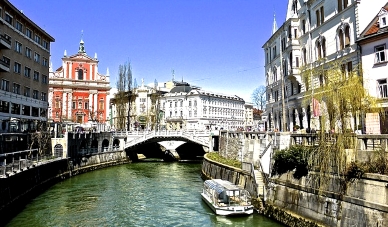
At Prešeren Square, three adjacent crossings form the city’s best-known river scene. An older stone central bridge was joined by two pedestrian side bridges designed by Jože Plečnik. The result opens the route toward the old town and provides several choices for movement. It feels as much like a small public square as a bridge.

Start on the Prešeren Square side and cross slowly. Notice the balustrades, the steps to the river and the view toward the market. Then walk a little along the bank and turn back. The bridge’s composition is clearer from a slight distance than from its centre. Morning is often quieter, while illuminated façades make evening attractive.
Dragon Bridge: Zmajski most
The Dragon Bridge is named for the sculptures that have become one of Ljubljana’s visual symbols. Completed in the early twentieth century, it belongs to a different architectural period from Plečnik’s Triple Bridge. Look beyond the dragons to the decorative lamps and the bridge’s overall structure.

The bridge carries traffic, so take photographs from safe pedestrian areas. A close-up of a dragon is memorable, but a wide view from the bank gives better context. The Central Market is close enough to combine with the stop.
Butchers’ Bridge: Mesarski most
Butchers’ Bridge opened in 2010 near the market. Its contemporary design, sculptures and love locks contrast with the older crossings. The name refers to the traditional market setting, while its current identity also includes couples attaching locks to the railings.

Use it for a view back toward Plečnik’s riverside market buildings. Avoid adding anything that might damage the bridge or obstruct other visitors. Even without a lock or a photograph, it is an easy route between the two sides of the market area.
Cobblers’ Bridge: Čevljarski most
Farther south, Plečnik’s Cobblers’ Bridge is also called Shoemakers’ Bridge. The present structure dates from the early 1930s, replacing an older crossing on the site. Its columns and open layout make it feel like an outdoor room over the river. The name recalls the shoemakers associated with the former bridge.

Cross from the older streets toward Novi trg and watch how the view shifts between the columns. It is a good place to pause after a busier stretch around the market. The riverside cafés nearby make a relaxed end to a central walk.
Fish Market Footbridge: Ribja brv
Near the historic Fish Square, a modern pedestrian footbridge offers another quick link across the Ljubljanica. It has a lighter, more understated presence than the Dragon or Triple Bridge. That is part of its appeal: it shows how a contemporary crossing can fit among older buildings without trying to mimic them.

Use it to return on the bank you have not yet explored. A bridge walk does not have to cover every crossing in one fixed order. The short distances allow detours into a lane or a square whenever something catches your eye.
Other crossings and names
These five are a convenient selection, not the total number of bridges in Ljubljana. Continue along the river and you will encounter more pedestrian and road links. Slovenian names may appear on maps: Tromostovje, Zmajski most, Mesarski most and Čevljarski most correspond to the English names above. Our place-name guide explains other travel names in the country.
A self-guided walking route
Start at Prešeren Square and cross the Triple Bridge. Turn toward the Central Market and look at the river colonnade. Cross Butchers’ Bridge for a view back, then visit the Dragon Bridge. Walk south on one bank, cross the Fish Market Footbridge and continue to Cobblers’ Bridge. Return on the opposite bank to see familiar structures from new angles.
This route can take less than an hour if you keep walking, but that misses much of the point. Allow time for the market in the morning, the cathedral nearby and a riverside break. Ljubljana Castle can follow in the afternoon if you want a higher viewpoint over the route.
Views from a boat
A river cruise shows bridge profiles and the embankments from below. Operators, departure places and routes vary by season and water conditions. Check whether the particular trip passes the bridges you most want to see. A boat ride works best after a walk, when you recognise the buildings and crossings from another perspective.
Compare routes, languages and meeting points before booking.
Ljubljana Card
The bridge walk itself is free. A Ljubljana Card may help if your wider itinerary includes paid attractions, museums, castle visits and bus rides within its validity period. Compare current inclusions with the individual tickets you would actually use.
Check current attractions and validity before purchasing.
Photography and timing
Morning is useful for a quieter market-side route; evening gives reflections and illuminated buildings. After rain, watch for slippery paving. Do not stop suddenly in the middle of a busy crossing for a photograph. Step aside where there is space and let people pass.
A wide photograph from the bank can show the relationship between bridge and city. Details such as a dragon, column or balustrade work better as secondary images. The six photographs here show how different the crossings look despite their close spacing.
Where to stay
Central accommodation makes it easy to see the bridges in different light without planning transport. Compare the exact location if quiet nights or station access are important. A room a little beyond the riverside may suit travellers who prefer less evening activity.
Compare locations and guest reviews before choosing a base.
Beyond the river
Continue into the old town and castle, or choose Tivoli Park for a greener second half of the day. If you stay longer in the capital, Lake Bled and Postojna Cave are separate day-trip possibilities rather than stops on a short bridge walk.
Frequently asked questions
Are the bridges free to cross?
Yes, the public crossings described here can be explored on foot without a ticket.
Which is the most famous?
Triple Bridge is the classic central scene; Dragon Bridge is especially known for its sculptures.
Did Plečnik design them all?
No. His work includes the Triple and Cobblers’ bridges, while others date from different periods.
How long does a bridge walk take?
Allow at least an hour, and more if you visit the market, take photographs or stop for food.
Architecture and city history on one walk
The central crossings show different ways a city can solve the same practical problem. The older centre needed dependable movement between banks. Plečnik broadened the civic experience at the Triple Bridge and created an open, columned place at Cobblers’ Bridge. Dragon Bridge represents another era’s engineering and Art Nouveau taste. Butchers’ Bridge and the Fish Market Footbridge belong to a more recent city.
Notice what each crossing connects. The Triple Bridge links a central square and the old town; Butchers’ Bridge reaches the market; Cobblers’ Bridge joins quieter streets. This relationship makes the sequence easier to remember than a list of dates.
Walking with children
The bridges provide short goals for a family route. Start with the dragons, then look for the three parallel crossings and finish with a snack near the market. Keep children close beside traffic at Dragon Bridge and in crowded pedestrian areas. A brief, enjoyable walk is more useful than insisting on every historical detail.
Explain that the river is not a play area. Stone edges can be slippery after rain, and a photograph should never involve climbing a railing. If the day is hot, take a water break and consider a park afterward.
Access and route choices
The central route is relatively compact, but paving, kerbs and the approaches to individual bridges vary. Visitors using a wheelchair, walker or pushchair should assess each crossing and choose wider riverside paths where possible. A boat tour has separate boarding requirements that should be checked with the operator.
For a shorter route, focus on Triple, Butchers’ and Dragon bridges near the market. For a longer one, extend south to Cobblers’ Bridge and return on the opposite bank. This flexibility is more helpful than a fixed loop that may not suit every visitor.
Connecting the walk to other sights
From the market, the cathedral is close. From the old town side, you can head toward the castle funicular or continue through historic squares. Tivoli Park is farther away but provides a contrasting green setting after the river. Choosing one extension avoids turning a pleasant walk into an overfull day.
In the morning, market stalls make the riverside especially active. By evening, the bridges are part of the city’s social life and reflect in the water. Seeing both times of day is easy if you stay centrally, and the experience changes without needing another ticket.
Where to pause
Prešeren Square is lively, but often busy. A few minutes farther along the embankment may offer a calmer view. At Cobblers’ Bridge, pause to see the columns from the side. At Dragon Bridge, stand back for a photograph that includes both sculpture and structure. Keep passages clear while you look; these routes serve residents moving through the city.
A second circuit at a different time
Return to the central bridges after dark if your schedule allows. The main squares remain lively, and reflected light changes how the stonework and river appear. Keep to public, well-lit paths and pay attention to bicycles and people crossing quickly. A second walk is useful for a different viewpoint rather than another rushed attempt to collect photographs.
On a quieter morning, start from the market end and walk toward Prešeren Square. Watch deliveries and residents moving through the centre. The same bridges that serve visitors also carry everyday journeys. This is especially clear when you stand aside and let the flow of people pass for a minute.
Reading a bridge from its banks
At each crossing, ask three simple questions. What streets does it join? What can you see from the middle? How does it look from the next bridge or bank? The answers reveal why the Triple Bridge became a meeting place, why Butchers’ Bridge fits the market and why Cobblers’ Bridge feels more spacious than its practical width suggests.
The walk does not require an audio guide, though a knowledgeable guide can add historical context. If you are exploring independently, compare the names on a current map and take time between stops. The distances are short enough to backtrack whenever the light or view improves.