 Posted by
Snakes are part of Slovenia’s varied wildlife, from warm rocky slopes near the Adriatic to alpine valleys and riverbanks. Most encounters are brief: a snake feels your footsteps and slips away. Visitors need sensible habits rather than fear, especially when walking through long grass, moving stones or reaching into gaps they cannot see.
At a glance: snakes in Slovenia
- Three native vipers deserve particular caution: the nose-horned viper, common adder and asp viper.
- Several harmless snakes, including grass snakes and dice snakes, may be seen near water.
- Leave every snake alone. Do not rely on colour or a single marking to identify it.
- For a suspected bite, move away, keep the person still and call Slovenia’s emergency number 112.
- Do not cut, suck or squeeze the wound, apply a tourniquet, or attempt to catch the snake.
Are snakes in Slovenia dangerous?
A small minority of Slovenian snakes are medically important venomous vipers. They do not seek out people, and most will escape if given space. A bite is possible if a snake is stepped on, handled or cornered. Even a snake that appears inactive should be left in peace. The practical rule is easy: watch where you put hands and feet, keep to the path where possible and let the animal move away.
Older lists sometimes mix venomous and harmless species or offer an exact species total without explaining changing taxonomy. The relevant visitor distinction is between the three native vipers and the many other snakes that pose little or no medical danger. The rear-fanged European cat snake is occasionally described as “venomous”; it does not belong in the same risk category as the vipers. Never pick one up to test an identification.
Slovenia’s three vipers
Nose-horned viper
The nose-horned viper, Vipera ammodytes, is associated with sunny, rocky habitats, scrub, dry stone walls and open slopes. Its small raised scale on the snout can be distinctive at close range, but the colour and zigzag pattern vary. There is no need to approach to inspect the “horn”. Look carefully before sitting on stones or putting a hand into a wall or pile of rocks. This species is found in parts of Slovenia and the wider Balkans; it is wrong to assume that all viper habitat lies only in lowlands.
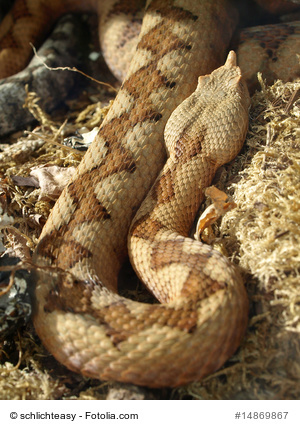
The bite of a nose-horned viper can cause significant illness and requires prompt medical assessment. The severity depends on circumstances including the amount of venom injected and the person affected. A quiet-looking puncture is not a reliable sign that all is well. Children and people with underlying illnesses may be more vulnerable, but everyone with a suspected bite should seek urgent help.
Common adder
The common adder, Vipera berus, tolerates cooler environments and can inhabit mountain areas. Its colour ranges widely, including dark individuals on which a zigzag may be difficult to see. It uses basking places to warm itself and retreats when disturbed. A snake encountered at the edge of a sunny mountain trail should be allowed room to leave rather than pushed aside with a stick.
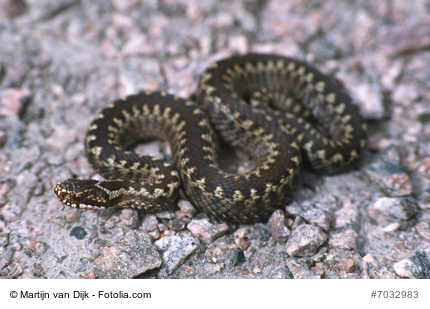
Adder bites are often treatable, but it is impossible for a traveller to judge the likely course just by looking at the wound. Pain, swelling, nausea and other symptoms can develop. Keep the person calm, avoid exertion and contact emergency services rather than walking a long distance to see whether symptoms disappear.
Asp viper
The asp viper, Vipera aspis, occurs in parts of western Slovenia. It can share the broader landscape with other vipers, so a precise field identification based on location alone is unreliable. As with any suspected viper bite, obtain medical help quickly. A distant photograph, taken only if it can be done without approaching the animal, may assist professionals, but treating the bite matters far more than naming the species.
Harmless snakes you might encounter
Grass snakes and dice snakes
Water and wetland edges support several snakes. Grass snakes may swim or bask beside a pond, marsh or slow watercourse, while dice snakes are especially associated with aquatic prey such as fish. Neither is a reason to avoid Slovenia’s lakes. Look along a bank from a comfortable distance; the animals usually disappear as soon as they notice movement. Near Lake Bled and Lake Bohinj, wildlife watching is a pleasant side activity, but never chase a snake into the water or block its retreat.
Smooth snakes and other dry-land species
Smooth snakes are sometimes mistaken for adders because they are relatively short and patterned. They are harmless to people, but the resemblance makes handling a particularly bad idea. Slovenia also has other non-viper species in suitable habitats, including warmer coastal areas and rocky terrain. The exact identification is best left to someone with expertise and a good view. No tourist needs to distinguish all the species to behave safely.
Rock piles, hedges, gardens and quiet edges of paths offer shelter and prey. A snake in such a place belongs to the habitat; do not move it for a photograph. If one appears on an accommodation terrace, keep children and pets away and ask the host or local wildlife service for advice. Avoid trying to relocate it yourself.
Where and when are encounters more likely?
Snakes depend on outside warmth, so a sunny morning after a cool night may draw one onto a rock or path. Warm conditions, sheltered walls, grassy margins and areas with prey can also make sightings more likely. There is no single season or hour when a hiker can ignore the ground altogether. On hot days many animals avoid exposed midday heat. After rain or in changing weather, their movements may differ. Treat these as useful observations, not guarantees.
On the Slovenian coast, scrub and stone walls are places to take care when reaching off trail. Around Bovec, the wildlife of the Soča Valley lives amid paths, riverbanks and meadows. In the mountains near Kranjska Gora, watch footing on warm open slopes. These are examples of habitat, not claims that a particular visitor attraction has a high bite risk.
How to avoid a bite on a hike
- Stay on visible paths and wear sturdy closed shoes in rough or overgrown terrain.
- Look before stepping over logs and rocks, and avoid placing bare hands into cracks or dense vegetation.
- Use a torch when walking outside in darkness.
- Give a snake a clear escape route; do not prod, handle or attempt to photograph it closely.
- Keep a dog close where wildlife may be present, and teach children to observe from a distance.
- Check your route and mobile coverage before setting off into remote terrain.
These habits are useful well beyond snakes. They also make walks more comfortable in changing weather and on uneven ground. On popular routes, allow others to pass safely if a snake is visible: do not form a crowd around it. A little patience is usually all that is needed.
What to do after a suspected snakebite
Move out of the snake’s reach, then call 112 for emergency help in Slovenia. Give your location as precisely as possible, including a trail name, landmark or coordinates if available. Keep the affected person still and reassure them. Support the bitten limb in a comfortable position and remove rings, watches or tight items before swelling develops. Follow the dispatcher’s instructions. If the person becomes faint or has breathing problems, tell the dispatcher immediately.
Do not cut the wound, suck out venom, apply ice, bind the limb tightly or use a tourniquet. Do not drink alcohol or drive yourself if you feel unwell. Do not try to capture or kill the snake: that creates another opportunity for a bite and delays care. If you can record the appearance from a safe distance without losing time, that is optional. Medical professionals can assess and treat a bite without the animal.
If you are far from a road, avoid unnecessary exertion while emergency responders advise the safest evacuation. Even when there is little initial pain, a suspected viper bite warrants assessment. The official Slovenian emergency service describes 112 as the number for urgent medical assistance and mountain rescue; the NHS recommends keeping calm, removing jewellery and seeking medical help after a snakebite.
Snakes, children and pets
Tell children before an outing that they should stop and call an adult if they see a snake. A simple rule works better than alarming stories about every snake being deadly. At a picnic spot, use clear ground rather than a hidden space under stones or branches. If a child may have been bitten, call 112 promptly and share their age and symptoms with the dispatcher.
Dogs may investigate movement in bushes or among rocks. Keep them under control in wildlife areas. If a dog is bitten or suddenly becomes weak after contact with a snake, seek veterinary help promptly; ask local emergency services for guidance if you do not know the nearest clinic. Do not try to treat an animal with human medication.
Enjoying Slovenia’s wildlife responsibly
Snakes help control small-animal populations and form part of the food web. A respectful encounter can be memorable: pause, look from a distance and continue once the animal has left the path. Wildlife photographs are best taken with a zoom lens rather than by moving stones or disturbing shelter. For more on habitats, see our guide to the flora of Slovenia and the broader fauna guide.
In choosing where to go in Slovenia, snake risk should not dominate the itinerary. The same sensible caution applies whether you are exploring the Alps, the coast, a meadow or a lake. Plan a manageable route, carry water, respect local signs and enjoy the landscapes. Travellers who prefer guided outdoor activities can compare the experience and equipment provided before booking.
Explore Slovenia with a guide
Looking for a guided nature walk, river outing or other outdoor activity? Compare routes, difficulty and cancellation terms before choosing a tour.
Stay near your hiking base
A base in a town such as Bovec, Bled or Kranjska Gora makes it easier to plan trailheads and transport. Check the exact location and recent guest reviews.
Planning a nature walk with snake awareness
Preparation should be proportional to the outing. A short, signposted walk near town requires comfortable shoes, water and attention to the path. A remote mountain trail also calls for a current forecast, route map, extra clothing and a plan to return before dark. Tell someone your route when travelling alone. Mobile reception can be patchy in valleys; know where you are before you need to give a location to a dispatcher.
At a viewpoint or picnic stop, examine the ground before placing a blanket or sitting against a wall. Put bags where you can see them and shake out shoes left outdoors. These are simple habits, not a reason to stay away from rural accommodation. Snakes generally avoid disturbance, and a visitor who gives them space can continue their day.
What a photograph can and cannot tell you
Identification from a distant photograph is often uncertain. Light, angle and colour variation can obscure useful features, while several harmless species are patterned. A social-media identification should never determine whether a bite needs medical care. A clear photograph taken without approaching the animal may help an expert later; the first priorities are distance, 112 and care for the bitten person.
Respect for protected habitats
Stone walls, sunny slopes and wetland margins support many animals besides snakes. Do not dismantle rock piles or disturb vegetation to look for wildlife. At reserves, remain on marked routes and keep dogs controlled. Observation from a path protects both visitors and the habitat. Guided nature walks can be useful for learning to notice wildlife while avoiding unnecessary disturbance.
Different Slovenian landscapes have different conditions. Coastal scrub may be hot and dry, an alpine walk cool and exposed, and a lakeside path busy with other visitors. Choose clothing and footwear for the full route. Carrying a light first-aid kit is sensible, but it does not substitute for emergency services after a suspected viper bite.
Frequently asked questions
How many venomous snakes live in Slovenia?
Three native vipers are the main medical concern: the nose-horned viper, common adder and asp viper. A rear-fanged cat snake is sometimes included in older “venomous” lists, but it should not be presented as equivalent to those vipers.
Should I avoid hiking in Slovenia?
No. Ordinary care with shoes, paths and hand placement lets people enjoy hiking. Snakes normally avoid encounters with humans.
Is every zigzag-patterned snake an adder?
No. Colour and markings vary and harmless species can be confused with vipers. Keep a safe distance instead of trying to identify a snake up close.
What number do I call in an emergency?
Call 112 in Slovenia for emergency medical assistance and rescue. Share your location and follow the dispatcher’s advice.
Safety sources: Slovenian emergency call guidance and NHS snakebite advice.